
Venturing deep into the jungle awakens curiosity and intrigue. Imagining yourself encountering this powerful creature is both intimidating and fascinating. The Amazonian jaguar (Panthera onca) inspires admiration and passion for its beauty and strength. It is the largest feline in the Americas and the only representative of the Panthera genus found in this region, ranking as the third-largest feline species in the world.
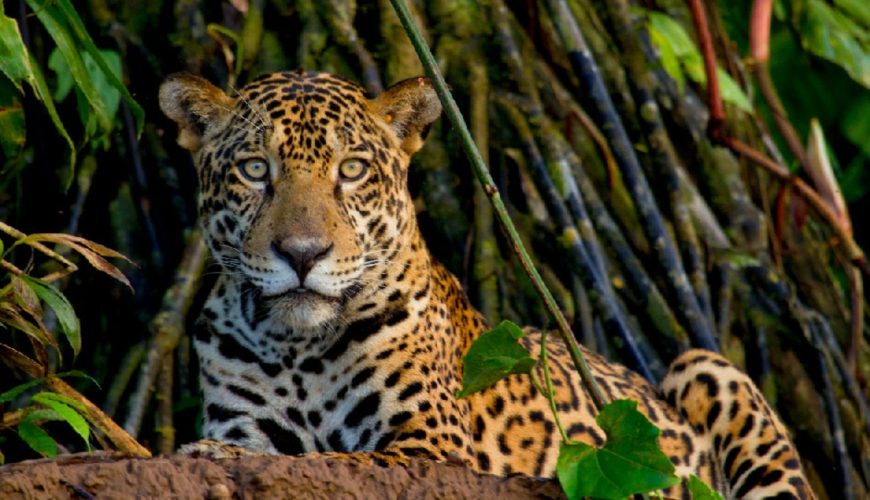
The jaguar is a top predator of the rainforest, sharing this role with the caiman. Renowned for their exceptional swimming and climbing abilities, it typically inhabits areas near rivers, swamps, and dense forests, where it can remain concealed while searching for prey. Its range spans the Orinoco and Amazon basins, including Venezuela, the Guianas, northern and central Brazil, and eastern Bolivia—across the vast Amazon rainforest.
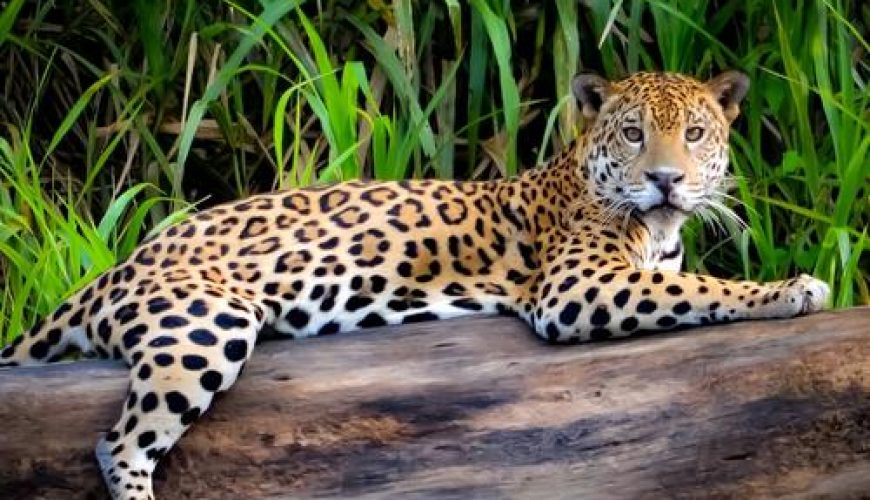
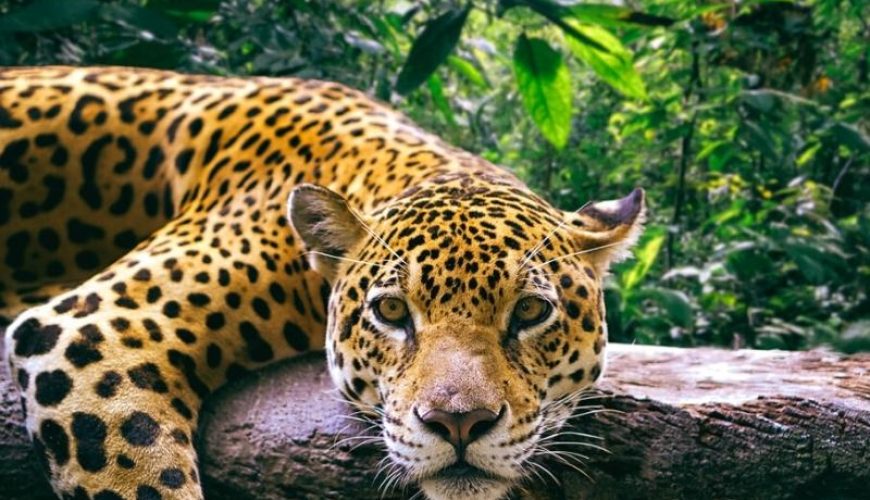
This magnificent species are characterized by its short, dense, soft, and shiny coat. Its fur typically appears in two color patterns: the common reddish-yellow tone with black rosettes containing a central spot, varying in shape and size across the body; and the much rarer dark-brown to nearly black coloration.
In general, females have a paler coat than males. Black jaguars are extremely rare, and although their coats appear solid, the spots can still be faintly distinguished. Adults typically weigh between 45 and 90 kilograms.
Females give birth to one to four cubs per litter after a gestation period of approximately three to four months. Cubs are born with spots similar to those of adults.Jaguars are solitary and territorial, active both day and night, and spend much of their time hidden in dense vegetation, caves, or rocky shelters. They climb trees with ease and may rest there for long periods. While they usually avoid people, they can occasionally approach rural areas when natural prey is scarce.
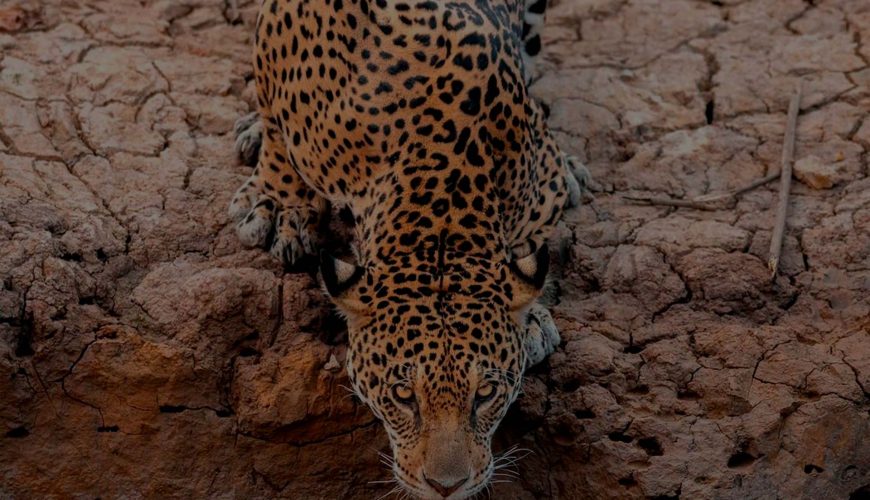
As strict carnivores, jaguars are solitary and opportunistic hunters. Their diet includes more than 80 different species. They favor larger prey such as tapirs, deer, peccaries, and caimans, but they may also feed on smaller species such as frogs, large birds, fish, porcupines, or turtles. They kill by delivering a powerful bite to the neck or skull, causing instant death a hunting technique characteristic of the Panthera genus. Rather than chasing its prey, Jaguars often rely on stealth and ambush, moving quietly through forest paths while listening and watching for their next opportunity.
Jaguars can live up to 20 years. Unfortunately, they are currently endangered due to excessive hunting and the deforestation of their habitat.
Inside Peru Travel invites you to explore, observe, and appreciate this extraordinary creature — an enduring symbol of the Amazon rainforest.
By. Chantal D Rey

Comment (0)